
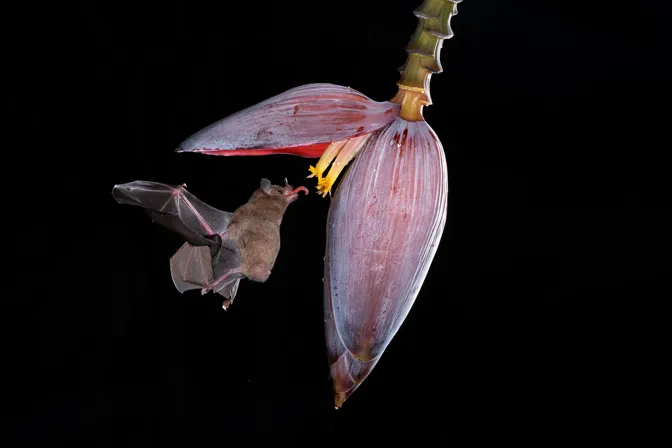


H4_W6B_005
Date: 2022
Location: Costa Rica
Did you know?
Pallas's Long-tongued Bat, scientifically known as Glossophaga soricina, is a small bat species found in various parts of the Americas, including South and Central America, the Caribbean, and southwestern North America. It belongs to the family Phyllostomidae and is known for its unique feeding habits and long, specialized tongue. . In addition to nectar, these bats may also consume some fruit and pollen, and they occasionally catch small insects while in flight. Conservation efforts aimed at protecting their habitats and raising awareness about the vital role they play in pollination are essential for the survival of Pallas's Long-tongued Bats. As with many bat species, they face threats such as habitat loss and disturbance, making conservation and habitat preservation crucial for their continued presence in the wild.
About the picture
These bats have a distinctive appearance with a brownish or grayish fur coat and a relatively small body size compared to other bat species. However, their most remarkable feature is their long tongue, which is adapted for feeding on nectar from flowers. Pallas's Long-tongued Bats are nectarivores and are important pollinators for various plant species. They play a crucial role in the ecosystem by transferring pollen from one flower to another as they feed on nectar. This process facilitates the reproduction of many flowering plants
Fun Fact
These bats primarily found in South America have one of the highest metaboloism for nectar