
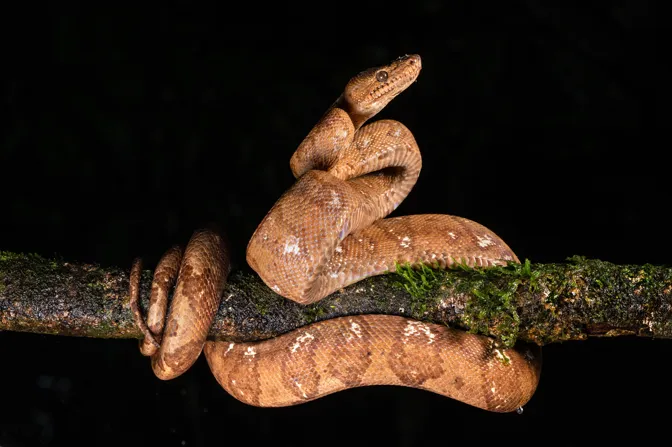


H4_W6B_004
Date: 2022
Location: Costa Rica
Did you know?
The Rainbow Boa, scientifically known as Epicrates cenchria, is a visually striking and docile snake species native to parts of South America. It belongs to the family Boidae and is renowned for its iridescent sheen and vibrant colors. Rainbow Boas are primarily terrestrial and are often found in tropical rainforests and humid areas. They are nocturnal and solitary, with a diet that mainly consists of small mammals, birds, and occasionally reptiles. One unique characteristic of Rainbow Boas is their live-bearing reproductive strategy. They give birth to live young rather than laying eggs, with litters typically ranging from 6 to 20 offspring. These snakes are occasionally kept as pets by reptile enthusiasts. However, they require specialized care due to their specific humidity and temperature needs, as well as their potential size. In the wild, Rainbow Boas face threats from habitat destruction, deforestation, and the pet trade. Conservation efforts aimed at preserving their natural habitats and promoting responsible pet ownership are essential for their continued well-being and biodiversity in South America.
About the picture
Rainbow Boas derive their common name from the distinctive iridescent appearance of their scales, which can exhibit a rainbow-like play of colors when exposed to light. This phenomenon is caused by microscopic ridges on their scales that refract and scatter light in a way that produces a shimmering effect. These snakes have a slender, medium-sized body that can reach lengths of up to 5 to 7 feet (1.5 to 2.1 meters). Their coloration and pattern can vary significantly among different subspecies and regions. Common colors include shades of red, orange, yellow, and brown, often with distinctive saddles or blotches along their back.
Fun Fact
The Brazilian rainbow boa is named for its iridescent skin that refracts light and creates a rainbow-colored effect