
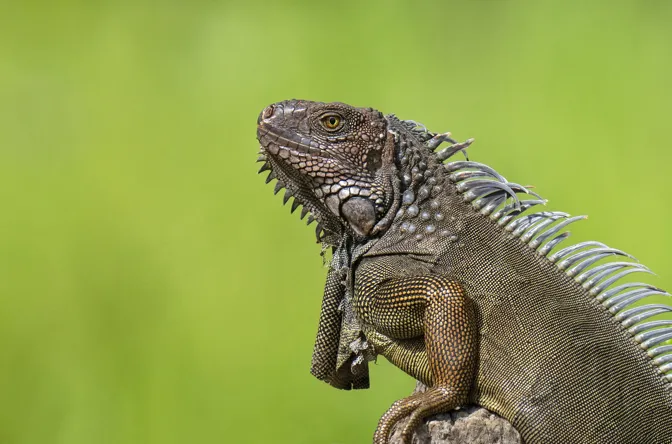


H4_W6B_003
Date: 2022
Location: Costa Rica
Did you know?
The Green Iguana, scientifically known as Iguana iguana, is a large and iconic lizard species found in Central and South America, as well as some Caribbean islands. It's one of the most recognizable and widely studied iguana species, known for its striking green coloration and distinctive appearance. These herbivorous reptiles primarily feed on leaves, flowers, fruits, and other plant matter. They are known for their efficient digestive system, which allows them to extract nutrients from tough and fibrous plant material. Green Iguanas are also known for their ability to regulate their body temperature through basking in the sun, making them ectothermic animals. They are typically solitary creatures but may come together during the breeding season. Conservation efforts for Green Iguanas focus on protecting their natural habitats from deforestation and habitat destruction. Additionally, they face threats from the pet trade, with many individuals captured and sold as exotic pets. Responsible wildlife management and efforts to reduce the illegal trade in these reptiles are important steps in their conservation.
About the picture
Green Iguanas have a long and slender body covered in rough, overlapping scales. They are primarily arboreal, spending most of their time in trees and shrubs. Their long, strong tails help them balance in trees and can be used as a defensive weapon against predators. One of the most notable features of the Green Iguana is its bright green coloration, which helps it blend into the lush foliage of its rainforest habitat. However, their coloration can vary, with some individuals displaying more muted or brownish colors.
Fun Fact
Iguanas are able to hold their breath for up to 30 minutes. They will often jump from tree to water using their powerful tail for swimming to escape. They are also able to leap down 40-50 feet without injury.