
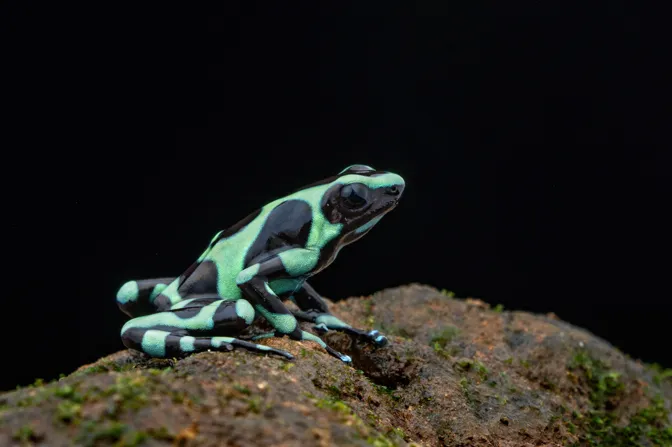


H4_W6B_007
Date: May-22
Location: Costa Rica
Did you know?
The Green and Black Poison Dart Frog, scientifically known as Dendrobates auratus, is a small and brightly colored frog species found in Central America, particularly in countries like Costa Rica, Nicaragua, and Panama. It is part of the Dendrobatidae family and is renowned for its striking coloration and toxic skin secretions. These frogs are known as "dart frogs" due to indigenous peoples using their toxic secretions to poison the tips of blowdarts and hunting arrows. However, not all species within this group are toxic. Green and Black Poison Dart Frogs are territorial and often live near bodies of water. They lay their eggs on leaves or other surfaces near water, and the male frogs guard and moisten the eggs until they hatch. The tadpoles are then transported to water, where they continue their development. In their native habitats, these frogs face threats from habitat destruction and climate change, which can impact the availability of suitable breeding sites and affect their population numbers. Conservation efforts, including habitat protection and captive breeding programs, are essential for their continued survival and biodiversity in their range.
About the picture
These frogs are relatively small, typically ranging from 2 to 5 centimeters (about 0.8 to 2 inches) in length. They have a bright green or yellow-green coloration with contrasting black stripes, spots, or patterns covering their bodies. This coloration serves as a warning to potential predators that they are toxic. The toxic secretions of Green and Black Poison Dart Frogs are a result of their diet in the wild, which includes consuming certain ants and mites containing toxic alkaloids. In captivity, where their diet changes, they typically lose their toxicity over time.
Fun Fact
Captive-bred poison dart frogs are not toxic due to their different diet. There are over 100 different species of poison dart frogs.