


H3_W2_004
Date: 2022
Location: Amboseli National Park, Kenya
Did you know?
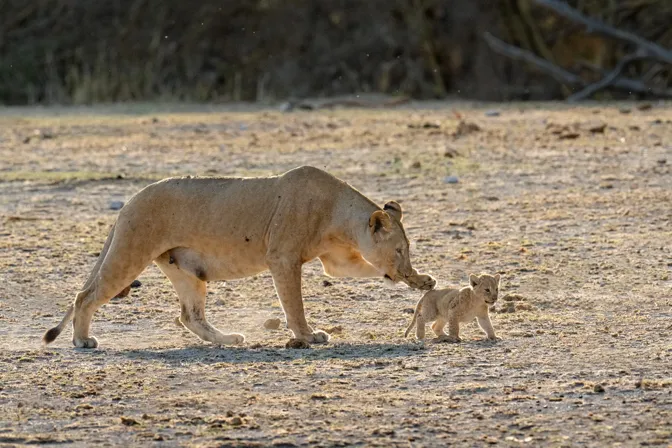
The African Lion is native to Africa. It has been listed as Vulnerable on the IUCN Red List since 1996 because populations in African countries have declined by about 43% since the early 1990s. The lion is the most social of all wild felid species, living in groups of related individuals with their offspring. Usually, the mother does not integrate herself and her cubs back into the pride until the cubs are six to eight weeks old. A newborn lion cub has dark spots, which fade as the cub reaches adulthood, although faint spots often may still be seen on the legs and underparts.
About the picture
This photo was taken in Amboseli National Park in 2022. We could see a herd of African elephants deep in a bamboo thicket sounding alarmed. Wanting to see what was happening, we stopped our vehicle and waited. Soon this lioness emerged with a cub. She was in the process of moving her cubs when the herd of elephants appeared in the vicinity. This particular cub did not want to be carried. The cub kept trying to run and finally, after this gentle yet stern pat from its mother’s paw, the cub relented and was carried to safety. Watching this rare interaction was a highlight of my trip.
Fun Fact
In some cultures, the lion symbolises power and royalty. In the Swahili language, the lion is known as Simba which also means "aggressive", "king" and "strong”. In parts of West Africa, lions symbolised the top class of their social hierarchies. In parts of West and East Africa, the lion is associated with healing and provides the connection between seers and the supernatural. In other East African traditions, the lion represents laziness.