


H2_W4_007
Date: 2013
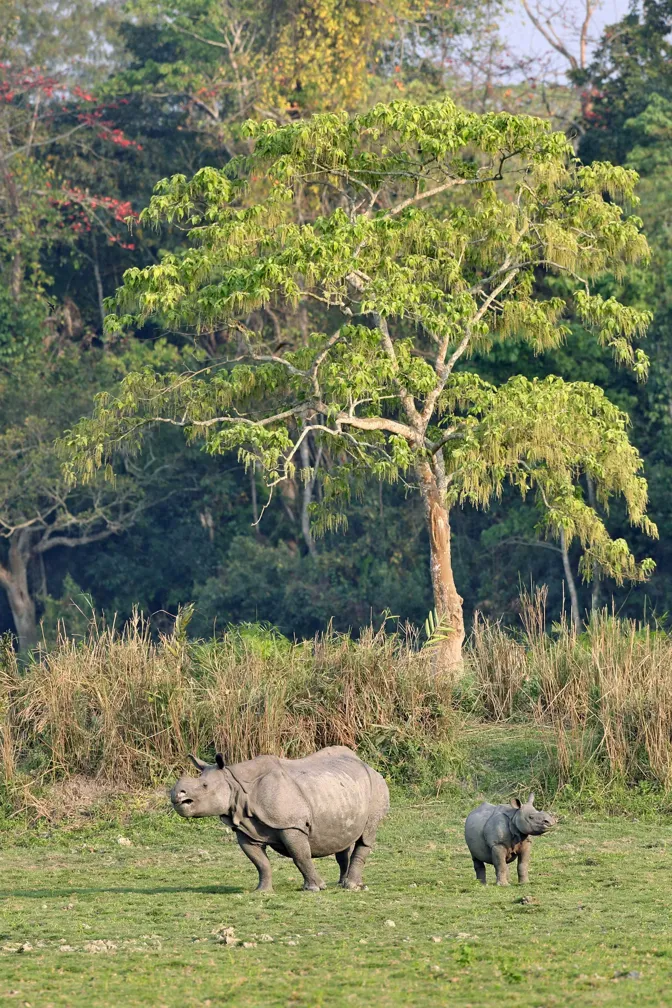
Location: Kaziranga National Park, Assam
Did you know?
The Greater One-Horned Rhino, also known as the Indian Rhino, is the largest of the rhino species. Once widespread across the entire northern part of the Indian sub-continent, rhino populations plummeted as they were hunted for sport or killed as agricultural pests. This pushed the species very close to extinction and by the start of the 20th century, only around 200 wild Greater One-Horned Rhinos remained. The recovery of the greater one-horned rhino is among the greatest conservation success stories in Asia. Thanks to strict protection and management from Indian and Nepalese wildlife authorities, the Greater One-Horned Rhino was brought back from the brink of extinction. Today, populations have increased to around 4000 rhinos in northeastern India and the Terai grasslands of Nepal.
About the picture
This image of the one-horned rhino mother and calf was taken in Kaziranga NP. One evening this mother and calf were coming towards a water hole when a herd of Asiatic water Buffaloes that was already there looked at them menacingly. The mother and calf stopped for a while looking startled, which is when I clicked this picture.
Fun Fact
The Greater One-Horned Rhino is a grazer and its diet consists almost entirely of grass and leaves, aquatic plants, and some fruits. They defecate at a pre-selected place every day and create a dunghill over a period of time.