


H4_W6B_009
Date: 2019
Location: Costa Rica
Did you know?
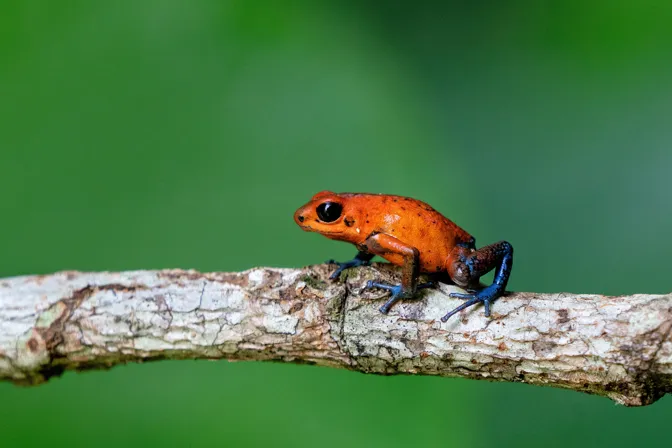
The Strawberry Poison-Dart Frog, scientifically known as Oophaga pumilio, is a small, brilliantly colored frog species found in Central America, particularly in regions like Costa Rica and Panama. It belongs to the family Dendrobatidae, which includes some of the world's most toxic amphibians. Strawberry Poison-Dart Frogs are diurnal, which means they are active during the day. They are highly territorial and are known to defend their territories aggressively. One of the fascinating aspects of these frogs is their parental care behavior. They lay their eggs in moist, sheltered locations on the forest floor or on vegetation. Once the eggs hatch, the male transports the tadpoles on his back to water-filled cavities in trees, such as bromeliad plants. He returns regularly to lay unfertilized eggs as a food source for the developing tadpoles. Conservation efforts, including habitat preservation and captive breeding programs, are important for the survival of Strawberry Poison-Dart Frogs. These frogs face threats from habitat destruction and habitat fragmentation, as well as illegal collection for the pet trade. Protecting their natural habitats and raising awareness about the importance of amphibian conservation are essential for their continued presence in Central American rainforests.
About the picture
Strawberry Poison-Dart Frogs are named for their vibrant red or orange-red coloration, which resembles a ripe strawberry. However, their coloration can vary across their range, and some populations may exhibit different shades or patterns. These frogs are quite small, with adults typically measuring around 2.5 to 4 centimeters (1 to 1.6 inches) in length. Their bright colors serve as a warning to predators that they are toxic. These toxins, called alkaloids, are derived from the ants and mites that the frogs eat in the wild.
Fun Fact
The strawberry poison dart frog is slender compared to similar species, with the frog's colorful skin also featuring bilateral symmetry.