
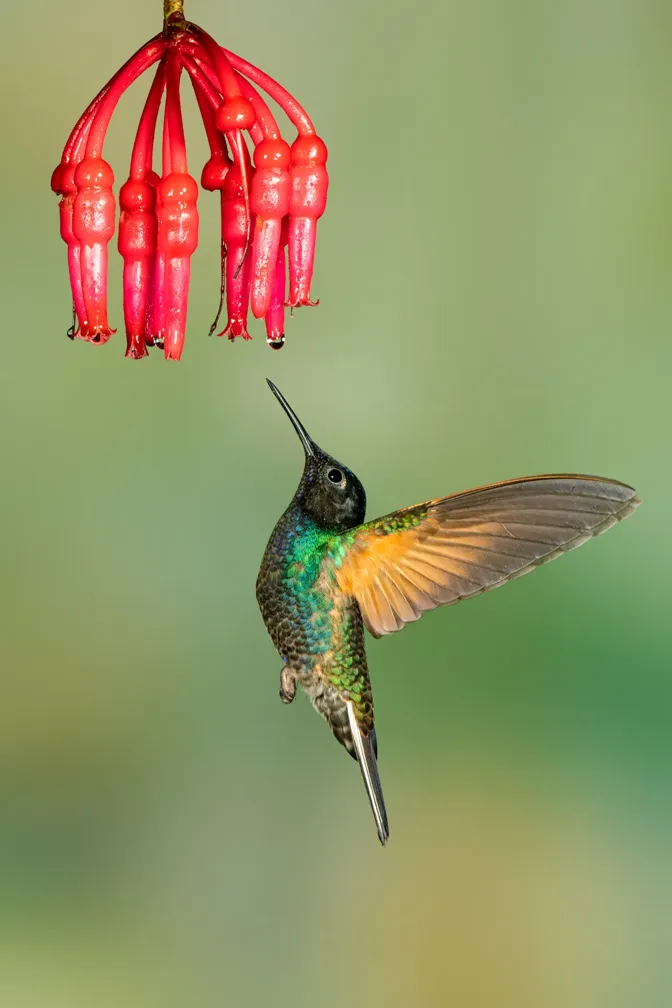


H4_W6A_008
Date: May-22
Location: Ecuador
Did you know?
The Violet-purple Coronet Hummingbird, scientifically known as Boissonneaua jardini, is a dazzling bird species found in the cloud forests of the Andes Mountains in South America. It is a member of the hummingbird family and is known for its vibrant plumage. Violet-purple Coronet Hummingbirds are highly territorial and defend their feeding and breeding territories vigorously. They perform impressive aerial displays, including high-speed dives and displays of their iridescent plumage. Conservation efforts focused on preserving their cloud forest habitats and combatting deforestation are crucial for the survival of the Violet-purple Coronet Hummingbird. By protecting their natural environments and promoting sustainable land management practices, we can help ensure the continued presence of this beautiful hummingbird species in the Andean regions of South America.
About the picture
The Violet-purple Coronet Hummingbird is named for its stunning violet and purple coloration, which covers its head, throat, and upper breast. The rest of its body is a combination of green and bronze. Males typically have longer, more elaborate tail feathers, which they use to display during courtship. These hummingbirds primarily feed on nectar from a variety of flowering plants. They have a specialized bill and tongue that allow them to extract nectar from deep within the flowers. They are also known to consume small insects and spiders for additional protein.
Fun Fact
Hummingbirds are the only birds that can fly backwards.