


H4_W3_006
Date: 2022
Location: Costa Rica
Did you know?
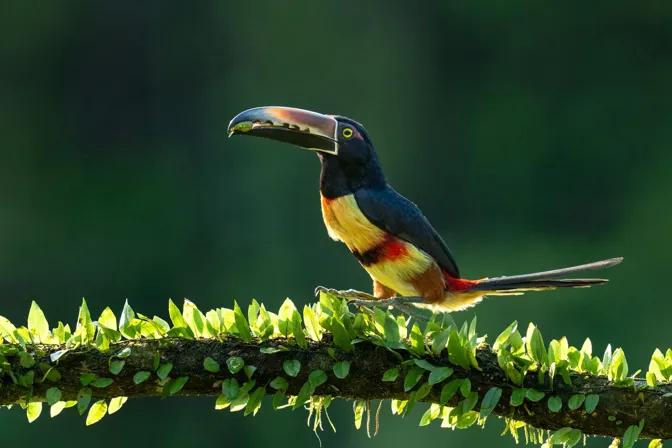
The Collared Aracari, known scientifically as Pteroglossus torquatus, is a small toucan species found in the forests of Central and South America. Its striking appearance and distinct features make it a captivating bird to observe. One notable behavior of the Collared Aracari is its skillful and graceful landing technique. When approaching a landing spot, the aracari slows down its flight, extends its wings slightly, and prepares for touchdown. With precision and agility, it adjusts its body angle and extends its tail to act as a stabilizer, ensuring a smooth landing. Its strong, short legs and sharp claws provide stability and grip as it alights on branches or perches. The landing of the Collared Aracari is a sight to behold, as it showcases the bird's mastery of flight and its ability to navigate through the forest canopy. This behavior is not only functional but also adds to the aracari's charm and beauty. The Collared Aracari's landing technique reflects its overall agility and adaptability, enabling it to move effortlessly within its habitat and access food sources such as fruits, insects, and small vertebrates.
About the picture
With its striking plumage, the Keel-billed Toucan stands out with a black body, white throat, and a dazzling array of colors on its bill, which is large and lightweight. The bill showcases a mix of green, blue, orange, and yellow hues, making it one of the most remarkable beaks in the avian world. This remarkable feature serves several purposes, including foraging for fruits and small prey, as well as regulating body temperature.
Fun Fact
These beautiful yellow toucans species live in the Amazon rainforest, one of Earth's most biodiverse habitats