

H4_W2_010
Date: 2017
Location: Galapagos Islands
Did you know?
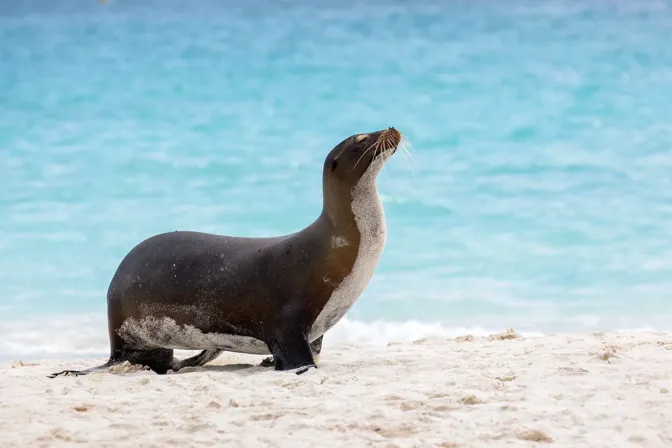
The Galapagos Sea Lion, scientifically known as Zalophus wollebaeki, is a charismatic and iconic marine mammal species endemic to the Galapagos Islands, a remote archipelago in the Pacific Ocean off the coast of Ecuador. These sea lions are part of the family Otariidae, which includes fur seals and sea lions. Galapagos Sea Lions are known for their distinctive appearance and playful behavior. They have sleek, streamlined bodies, with males being larger than females. Adult males can reach lengths of up to 2 meters (6.6 feet) and weigh around 250 kilograms (550 pounds), while females are smaller. Conservation efforts focused on protecting their habitats, regulating tourism activities, and managing interactions with humans are crucial for the survival of Galapagos Sea Lions. These sea lions are vulnerable to habitat disturbance, pollution, and entanglement in fishing gear. By preserving the unique and delicate ecosystems of the Galapagos Islands, we can help ensure the continued presence of this charismatic species in its natural environment.
About the picture
Galapagos Sea Lions primarily feed on a diet of fish and squid, foraging in the rich waters surrounding the islands. These sea lions are highly social animals, often seen in large colonies on beaches and rocky shorelines of the Galapagos Islands. They are known for their playful and curious nature, and they frequently engage in activities like swimming, surfing in the waves, and even approaching snorkelers and divers. Their vocalizations, which include barks and grunts, are commonly heard on the islands. They are excellent swimmers and divers, capable of hunting at various depths.
Fun Fact
Their fur varies in color from dark brown to light tan, and they have a broad, dog-like face with prominent whiskers. Males have a noticeable bump on their foreheads, which is called a "saggital crest" and develops as they mature.