


H4_W2_005
Date: May-22
Location: Mini Galapagos, Ecuador
Did you know?
The Humpback Whale, scientifically known as Megaptera novaeangliae, is a majestic marine mammal that inhabits oceans worldwide. It is known for its immense size, captivating behaviors, and melodic songs, making it one of the most iconic and recognizable whale species. Humpback Whales undertake extensive migrations, traveling thousands of miles between their breeding and feeding grounds. They primarily feed on small fish, krill, and plankton by using a feeding technique called bubble net feeding, where they blow bubbles around their prey to create a ring-shaped curtain and then rise through the middle with their mouths open to catch the trapped prey. Conservation efforts focused on reducing threats such as entanglement in fishing gear, ship strikes, and habitat degradation are crucial for the survival of Humpback Whales. International protections and conservation agreements have helped in the recovery of some populations, but continued efforts are necessary to ensure their long-term well-being and conservation.
About the picture
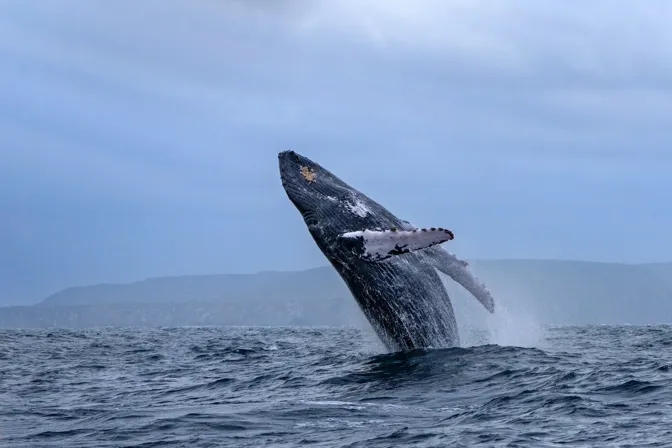
Humpback Whales are characterized by their large, streamlined bodies and long pectoral fins, which can reach lengths of up to 16 feet (5 meters). They have a distinctive body shape with a hump on their back and knobby protuberances on their head called tubercles. These whales are renowned for their acrobatic displays, which include breaching (leaping out of the water), slapping their tails on the surface, and fin waving. They are also known for their complex and haunting songs, sung by males during the breeding season.
Fun Fact
Humpback whales are known for their complex and hauntingly beautiful songs, which can travel for thousands of miles and are sung by males during mating season.