


H4_W1_009
Date: 2022
Location: Costa Rica
Did you know?
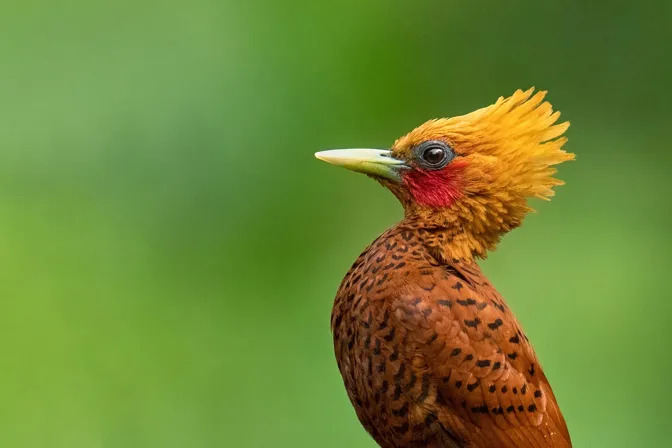
The Chestnut-coloured Woodpecker, scientifically known as Celeus castaneus, is a striking bird species found in the forests of Central and South America. With its vibrant plumage and unique adaptations, the Chestnut-coloured Woodpecker stands out among its avian counterparts. As its name suggests, this woodpecker showcases a rich chestnut-brown coloration on its back, head, and wings, while its underparts feature a contrasting creamy white or buff hue. It possesses a sturdy bill, ideal for drumming on tree trunks to excavate insect larvae and create nesting cavities. Chestnut-coloured Woodpeckers are often spotted in pairs or small family groups, exhibiting cooperative behavior when foraging or defending their territory. Their distinct calls and drumming sounds echo through the forest, announcing their presence. These woodpeckers play a crucial role in their ecosystem by controlling insect populations and creating nesting sites that are later used by other bird species. However, habitat loss, deforestation, and fragmentation pose significant threats to the Chestnut-coloured Woodpecker's survival. Conservation efforts that focus on protecting their forest habitats and promoting sustainable forestry practices are vital for ensuring the continued existence of this charismatic and ecologically important species.
About the picture
Chestnut-coloured Woodpeckers are often spotted in pairs or small family groups, exhibiting cooperative behavior when foraging or defending their territory. Their distinct calls and drumming sounds echo through the forest, announcing their presence.
Fun Fact
They have deep rufous-chestnut upperparts with a cream-buff rump and uppertail coverts, and sometimes faint black bars on the back