About Karnataka Forest Department
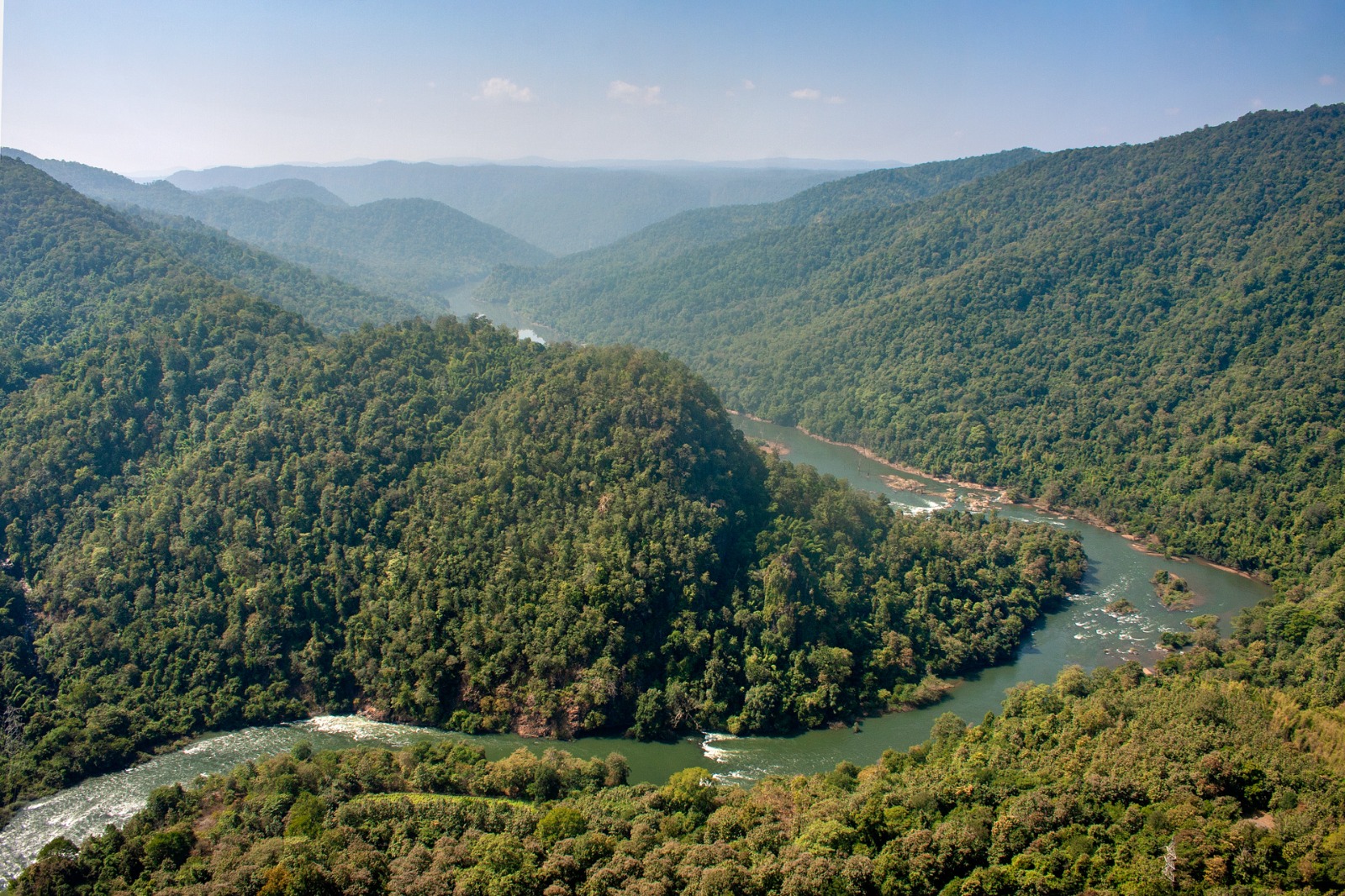
The Karnataka Forest Department has the primary mandate of protecting the forests and wildlife, conserving the rich biodiversity of the state, and ensuring that the ecological balance of the forest ecosystems is maintained. The Department is headed by the Principal Chief Conservator of Forests, Head of Forest Force(HOFF). The Department presently has a total working strength of around 8000 executive personnel including Indian Forest Service Officers and officers/ field staff of various cadres.
The total recorded forest area of the State is 43,382 sq. km. The State has a network of Protected Areas with 5 Tiger Reserves, 30 Wildlife Sanctuaries, 15 Conservation Reserves, and 1 Community Reserve.
The work carried out by the Department can be broadly classified into the following categories: regulatory, protection, conservation, and sustainable management:
- Regulatory: As part of the regulatory functions, the department enforces provisions of various legislations such as the Karnataka Forest Act 1963, Wildlife Protection Act 1972, Forest (Conservation) Act 1980, Karnataka Preservation of Trees Act 1976, etc., and corresponding rules.
- Protection: Protection functions include boundary consolidation, protection of forest areas from encroachment, illicit felling, mitigation of human-wildlife conflict, undertaking fire prevention and control measures, etc.
- Conservation: The conservation functions include taking up plantation works, soil-moisture conservation, and watershed development works for water security, conservation of rare, endangered, and threatened (RET) species, and conducting awareness activities to sensitise all sections of the society on the importance of forests, wildlife, and biodiversity.
- Sustainable Management: In territorial areas, the department is also involved in sustainable extraction and marketing of timber and other forest produce as per the specifications of the Working Plans. The Department is also engaged on a large scale in promoting agroforestry through incentivisation to support farmers’ incomes.
For more information, please visit: www.aranya.gov.in
Significance of Wildlife Week In Karnataka:
Every year, the Karnataka Forest Department organises state-level educational and fun events including a walkathon, quizzes, debates, art, and movie screenings for children, youth, and adults to celebrate Wildlife Week from October 2-8. These events are eagerly awaited by all and see thousands of people participating.
50 Years of Project Tiger
Project Tiger was launched in April 1973 by the Government of India under the leadership of Prime Minister Indira Gandhi. It is a one-of-a-kind project that aims to protect and save the Royal Bengal Tiger and its habitat in India. From 9 tiger reserves since its formative years, the Project Tiger coverage has increased to 51 at present, spread out in 18 of our tiger range states. This amounts to around 2.23% of the geographical area of our country.
2023 marks 50 successful years of Project Tiger’s unique and unparalleled conservation success story in India.
During the inaugural session of commemoration of 50 years of Project Tiger earlier this year, Prime Minister Narendra Modi said that the tiger leads the way in the protection and conservation of big cats. It is part of Indian culture to protect nature. "The success of Project Tiger is a matter of pride not only for India but for the whole world. India has completed 75 years of independence; and at the same time, 75 percent of the world's tiger population is in India, he said.
The Project Tiger strategy
The tiger reserves are constituted on a core/buffer strategy. The core areas have the legal status of a national park or a sanctuary, whereas the buffer or peripheral areas are a mix of forest and non-forest land, managed as a multiple-use area. Project Tiger aims to foster an exclusive tiger agenda in the core areas of tiger reserves, with an inclusive people-oriented agenda in the buffer.
The country aims to sustain a viable tiger population based on a scientifically calculated carrying capacity of habitats while maintaining a balance between development and wildlife conservation.
As per the National Tiger Conservation Authority (NTCA) website, the Tiger is an umbrella species that ensures viable populations of other wild animals (co-predators, prey) and forest, thereby ensuring the ecological viability of the entire area and habitat, which also ensures the water and climate security of the region.
Initially, the project covered nine tiger reserves spread over 18,278 sq km. Now, the project includes 53 tiger reserves sprawling over around 75,000 sq km of the region.
The country has around 3682 tigers, as per the estimation done in 2022 (AITE 2022), which forms more than 70 percent of the global wild tiger population, and the number is increasing at a rate of 6 percent per year.
Even though there has been a significant reduction in tiger poaching due to better technology and protection mechanisms, it remains to be a big threat to the big cats besides habitat fragmentation and degradation.
The goal for the future of Project Tiger would be to have a viable and sustainable tiger population in tiger habitats based on a scientifically calculated carrying capacity.
Project Tiger generates more than 45 lakh man-days of employment for local people annually. In addition, the government is supporting eco-development committees and self-help groups.
Project Tiger’s connection with Bandipur Tiger Reserve
In 1973 when Project Tiger was launched, Karnataka's Bandipur was among the first nine reserves that were brought under the flagship programme.
According to the state forest department, the National Park was formed by including most of the forest areas of the then Venugopal Wildlife Park established under the government notification dated February 19, 1941, and the area was enlarged in 1985 extending over an area of 874.20 sq. Km and named as Bandipur National Park.
Bandipur Tiger Reserve holds great environmental significance as it is part of the Nilgiri Biosphere Reserve which is India's first biosphere reserve. It is located amidst the picturesque surroundings of the towering Western Ghats on the Mysuru-Ooty highway in Karnataka and is an important part of the Nilgiri Biosphere Reserve that constitutes Karnataka’s Rajiv Gandhi National Park (Nagarahole) to its Northwest, Tamil Nadu’s Mudumalai Wildlife Sanctuary to its South, and Kerala’s Wayanad Wildlife Sanctuary to its Southwest.
Once the private hunting grounds of the erstwhile Maharajas, and nestled in the foothills of the Nilgiris, Bandipur has had a long tryst with tigers and is today, a popular destination for wildlife and nature enthusiasts..